The St. Laurent variety shares similar characteristics to Pinot Noir and is known for producing elegant and expressive wines. The 30 year old vines grow in limestone and sandstone soils, lending depth and character to the cuvee.
Like all Ruttger’s red wines St Laurent is fermented exclusively on the skins and undergoes natural acid reduction. After a gentle 7-day maceration and a natural malolactic fermentation in concrete tanks, the wine was matured mainly in stainless steel tanks to preserve freshness. Troken – Dry – style with 5 g/l of residual sugar.
The Neuleininger Höllenpfad vineyard’s sandy and limestone-rich soils, combined with a warm and sunny aspect, allow the grapes to reach excellent aromatic maturity.
Winemaker Rudolph Rüttger's family has been involved in winemaking since 1643, when Johannes Rüttger, born in Luxembourg in 1620, arrived in the village of Neuleiningen in the Rhine-Palatinate, south-west of Stuttgart.
Rudi’s winemaking experiences at home and abroad, particularly in Austria and New Zealand, have profoundly shaped his outlook. Today, he combines this knowledge with the deep roots of the family business, resulting in wines that reflect the character of the vineyards, their traditions and his personal touch.
The vineyards of tertiary limestone, calcareous marl, loess soil and bunter sandstone are situated on a promontory of the Haardt Mountains and lie in the sheltered foot of the slope above Neuleiningen. They include the single sites Feuermännchen, Schlossberg and Sonnenberg. Though separated by only a few hundred meters in distance, they produce their own style, structure and expression - diverse enough to offer significant differences.
Vines date from the oldest planted in 1958 (mainly Riesling) to the youngest from 2024, (Pinot Blanc and Pinot Gris); the grapes take on a distinctive soil tone and show strength and structure in an elegant way.
The St. Laurent variety shares similar characteristics to Pinot Noir and is known for producing elegant and expressive wines. The 30 year old vines grow in limestone and sandstone soils, lending depth and character to the cuvee.
Like all Ruttger’s red wines St Laurent is fermented exclusively on the skins and undergoes natural acid reduction. After a gentle 7-day maceration and a natural malolactic fermentation in concrete tanks, the wine was matured mainly in stainless steel tanks to preserve freshness. Troken – Dry – style with 5 g/l of residual sugar.
The Neuleininger Höllenpfad vineyard’s sandy and limestone-rich soils, combined with a warm and sunny aspect, allow the grapes to reach excellent aromatic maturity.
Winemaker Rudolph Rüttger's family has been involved in winemaking since 1643, when Johannes Rüttger, born in Luxembourg in 1620, arrived in the village of Neuleiningen in the Rhine-Palatinate, south-west of Stuttgart.
Rudi’s winemaking experiences at home and abroad, particularly in Austria and New Zealand, have profoundly shaped his outlook. Today, he combines this knowledge with the deep roots of the family business, resulting in wines that reflect the character of the vineyards, their traditions and his personal touch.
The vineyards of tertiary limestone, calcareous marl, loess soil and bunter sandstone are situated on a promontory of the Haardt Mountains and lie in the sheltered foot of the slope above Neuleiningen. They include the single sites Feuermännchen, Schlossberg and Sonnenberg. Though separated by only a few hundred meters in distance, they produce their own style, structure and expression - diverse enough to offer significant differences.
Vines date from the oldest planted in 1958 (mainly Riesling) to the youngest from 2024, (Pinot Blanc and Pinot Gris); the grapes take on a distinctive soil tone and show strength and structure in an elegant way.

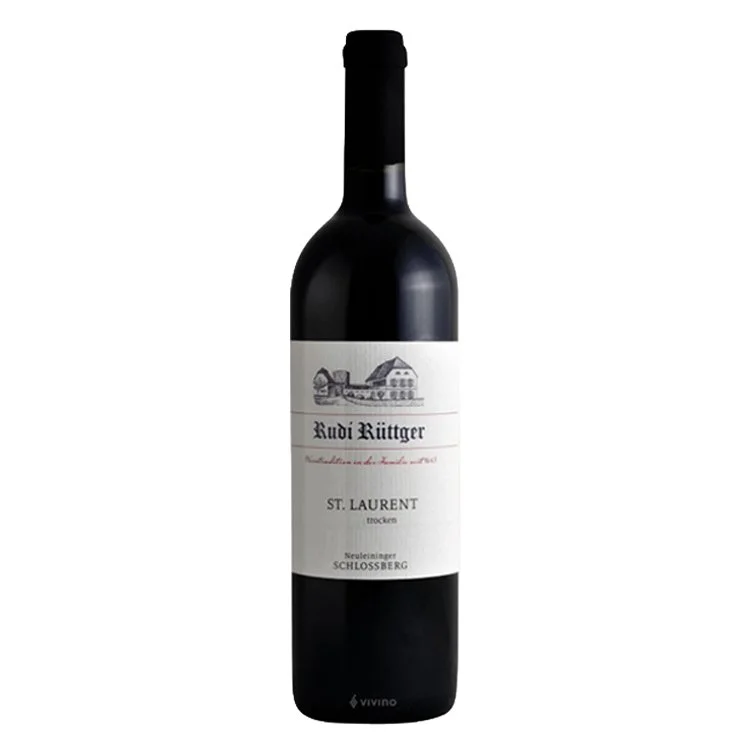 Image 1 of 1